Trump Tariffs at the Supreme Court — Watch How Wall Street Frames It as a Rally
Introduction
Markets do not merely react to events. They interpret them. When a Supreme Court decision affects tariff policy tied to a major political figure, the immediate question for investors is not ideological — it is structural: How will Wall Street frame it? The answer is straightforward.
1. The Removal of Uncertainty
In modern markets, uncertainty is a tradable variable. Policy ambiguity — whether around tariffs, regulation, or executive authority — is often described as a “headwind” or “overhang.” When such uncertainty is resolved, regardless of the direction of the decision, the dominant narrative frequently becomes:
“Clarity has returned.”
The removal of a variable is marketed as progress. Reduced ambiguity becomes a “clean setup” for risk assets. In market language, less uncertainty equals lower risk premium — at least in the short term.
2. The Federal Reserve Pivot Narrative
If, at the same time, expectations build around changes in Federal Reserve leadership or monetary direction, the narrative expands.
Markets begin pricing not just legal clarity — but policy alignment.
The storyline evolves into:
- A potentially more accommodative rate environment.
- Reduced friction between fiscal and monetary policy.
- Greater forward visibility for corporate financing conditions.
Whether these outcomes materialize immediately is secondary. What matters is the expectation.Expectations move markets faster than outcomes.
3. The Earnings Playbook
Policy clarity and rate expectations are only two parts of the mechanism. The third — and often most powerful — is earnings season. Ahead of reporting periods, analysts frequently revise estimates downward.
This creates:
- Lower performance hurdles.
- Higher probability of “beats.”
- Headlines that reinforce bullish momentum.
When expectations are compressed, surprise becomes easier.
A cycle emerges:
- Remove uncertainty.
- Reprice monetary expectations.
- Lower earnings estimates.
- Produce beats.
- Confirm bullish narrative.
This is not manipulation in the conspiratorial sense.
It is structural narrative management.
4. Why Framing Matters More Than the Event
Markets are not purely reactive systems. They are storytelling systems layered on top of liquidity. The same policy event can be framed as:
- Risk removed.
- Growth unlocked.
- Stability restored.
Or alternatively:
- Institutional conflict.
- Policy unpredictability.
- Structural instability.
Which framing dominates depends on positioning, liquidity, and incentives.
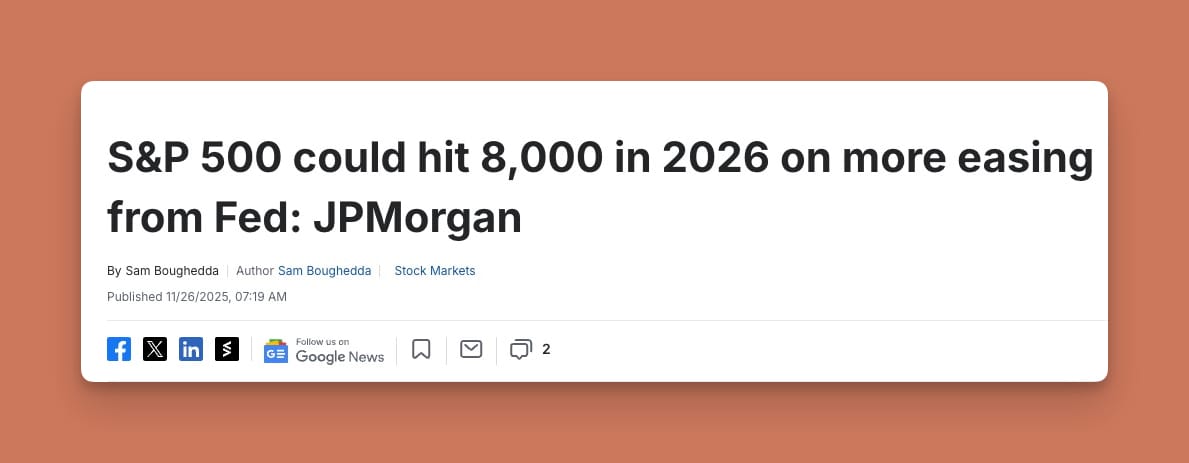
In index-heavy environments — particularly where ETFs concentrate flows into the S&P 500 — narrative alignment becomes even more powerful. When the index is the product, perception stability becomes critical.
5. The Structural Mechanism
The pattern is consistent:
- Legal clarity reduces volatility.
- Rate expectations drive valuation multiples.
- Lower earnings estimates facilitate positive surprises.
- Positive surprises sustain index momentum.
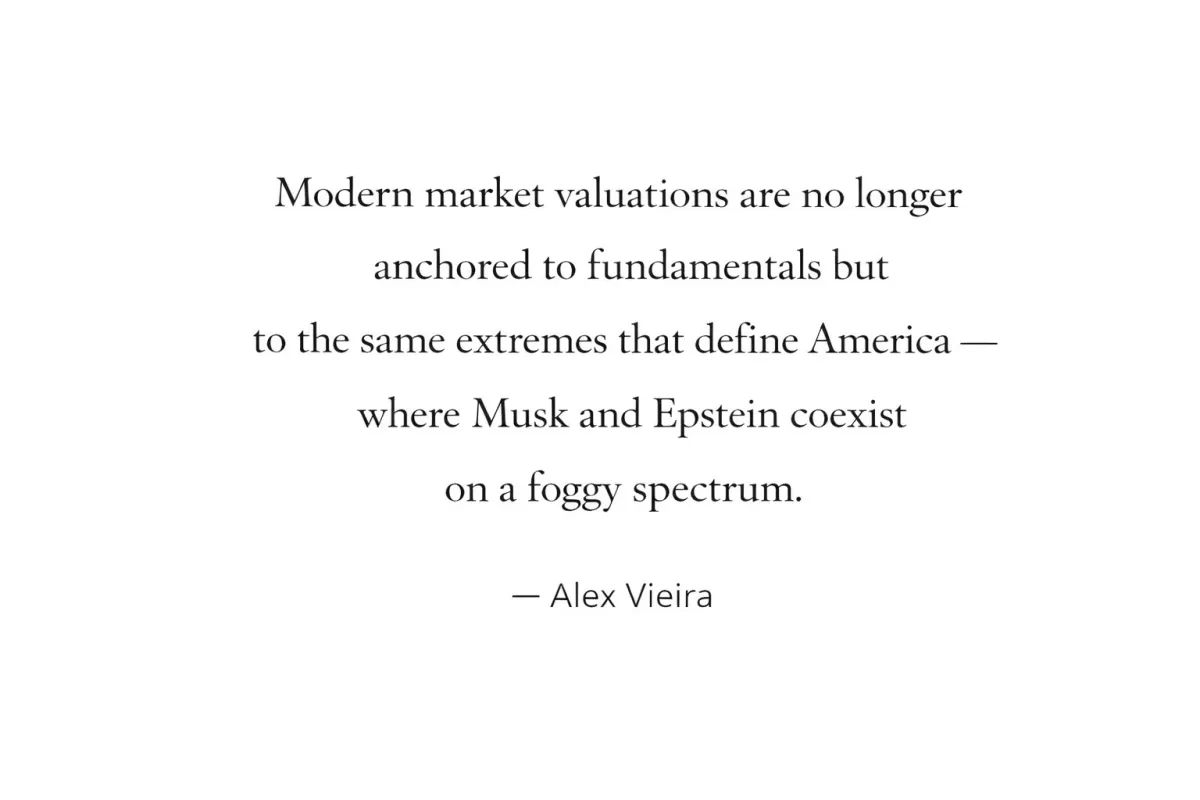
Over time, markets begin to function less as discounted cash-flow machines and more as reflexive expectation engines. The event itself becomes secondary to how it is interpreted.
Conclusion: Markets Trade Interpretation
The question is not whether policy shifts matter. They do.
The deeper question is: How will they be packaged?
In modern markets, interpretation precedes reaction. Narrative precedes valuation. When uncertainty is declared “resolved,” when rates are expected to soften, and when earnings hurdles are lowered, the framework for a rally is constructed — regardless of underlying complexity.Markets do not just price events. They price the story built around them.
 Luis
Why Stock Prices Keep Rising Despite Falling Earnings (S&P 500, Tesla & ETF Distortion Explained)